The True Cause of Antisemitism

Part II
In a recent article, The True Cause of Antisemitism, part I, I briefly mention some of the many concepts of what fuels the hatred of the Jewish people and Israel--and there were many, such as:
- Religious differences
- Economic competition
- Conspiracy theories about Jewish influence in society
- Racial theories
- Scapegoating of Jews during times of crisis
- Christians blaming Jews for the death of Jesus Christ
These are all valid causes behind antisemitism, but not one is the true cause.
Dennis Prager, a Jewish author and radio host, once said, “The hatred of Jews is different from other hatreds. Jews have been hated in pagan societies, Christian societies, and Muslim societies. They were hated by fascists and communists. They were hated in the ancient world and in the modern world. When you are hated in so many places by so many different peoples over so much time, something other than normal group hatred must be at work.”
And the conclusion in part I on antisemitism is what is behind what Dennis refers to as “not a normal hatred”. Although Dennis in his 2003 book with Joseph Telushkin, “Why the Jews?: The Reason for Antisemitism” did not come to this following conclusion. Remember, he is Jewish.
The conclusion to what is the true reason behind all antisemitism is the fallen angel Satan’s insatiable drive to wipe out the Jewish people and God’s plan for His covenant people. His ultimate goal was to prevent the coming of the Messiah through the Jewish people. That did not work. So now that Messiah has come, Satan’s continued war against the Jews reflects his desperate attempt to prevent Christ’s return to reign on earth and the fulfillment of prophecies regarding Israel’s restoration as foretold in Revelation. This attempt to destroy God’s plans for Jesus and for His people continues to be the force and hatred behind all antisemitism.
The Bible indicates that Satan is referred to as the "ruler of this world" in several verses, such as John 12:31. Paul said in Eph 6:12, “For we wrestle not against flesh and blood, but against principalities, against powers, against the rulers of the darkness of this world, against spiritual wickedness in high places."
Paul is telling us that power behind evil on earth is Satan and his minions, the fallen angels or demons that tempt mankind to sin or even possess them to do evil things and hate other human beings. And if we, the Christians, hold onto the belief that the Jewish people are no longer God’s chosen people, we contribute to antisemitism, and we might have Satan and his minions feeding us this false belief.
Hatred of the Jews in the Old Testament ancient history relate the constant battles against Israel and Judah from many adversaries. The following list identifies some of them. Their commonality was the worship of idols and gods, not the one true God. They were all essentially followers of Satan practicing ungodly acts.
- Philistines1
- Egyptians
- Assyrians
- Babylonians
- Ammonites, Moabites, and Edomites
- Amalekites
- King of Amorites
- Og, king of Bashan
- Midianites
- Arameans (Syrians)
- Canaanite Tribes
- Persia
Then there are the enemies who were descendants of Israel. Psalms 83:1-10 is a communal lament,2 where the psalmist Asaph cries out to God for help against the wicked nations encircling Israel. He specifically names the Edomites, the Ishmaelites, Moab and the Hagrites.
Each of these groups has a significant history with Israel. Edom descends from Esau, Jacob’s brother, who represents a family feud that lasted generations. The Edomites seemed to have the most vehement hatred toward Israel. The Ishmaelites are descendants of Ishmael,3 Abraham’s first son by Sarah's Egyptian handmaid. He lost his inheritance to Abraham after Isaac was born through Sarah. Conflict arose between the brothers and mothers which led to familial strife. And Moab comes from Lot, Abraham’s nephew. All these family ties seem to complicate relationships throughout generations. These people and nations were enemies of God, and thus God’s people. We can easily see Satan worked through them.
Christian antisemitism
In this article another contributing cause will be explained, where tragically it lays at the feet of many Christian denominations and is called Christian antisemitism. The history of the Crusades is one part of the history of antisemitism by Christians toward Jews in the Middle Ages. The crusader aimed to entirely eliminate the Jewish population, either by converting them to Christianity, or, if they refused, by killing them. This brutal attack was just one example of the antisemitism which was widespread throughout the Crusades.
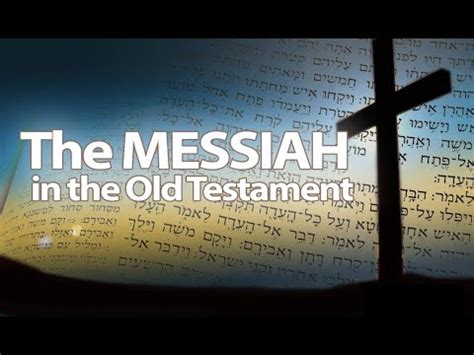 A lot of antisemitism came from blaming the Jews for the death of Jesus. Yet Jesus’ life, death and resurrection was prophesied throughout Scripture in over 300 verses before the Jews even rejected Jesus as their Messiah. The following are a few of those prophecies.
-
The Messiah would be born of a virgin - Jeremiah 31:22
The Messiah would be born in Bethlehem - Micah 5:2
The male children would be slaughtered - Jeremiah 13:15
The Messiah's forerunner would come in the spirit of Elijah - Malachi 4:5
The Messiah would speak in parables - Psalm 78:2
The Messiah would be presented to Jerusalem riding on a donkey - Zechariah 9:9
The Messiah would have a healing ministry - Isaiah 53:4
The Messiah would be the new covenant - Jeremiah 31:31
The Messiah would die for the sins of the world - Daniel 9:26
The Messiah would come to bring Israel back to God - Isaiah 49:5
The Messiah would be betrayed for thirty pieces of silver - Zechariah 11:12-13
The Messiah would be silent before his accusers - Isaiah 53:7
The Jews would have a hardened heart against the Messiah - Isaiah 6:9-10
The Messiah's rejection would cause God to remove His protection of Israel - Zechariah 11:10-11, Luke 19:41-44
Israel would be scattered as a result of rejecting the Messiah - Zechariah 13:7
The Messiah's hands and feet would be pierced (700 years before crucifixion was invented) - Psalm 22:16
The Messiah would ascend into heaven - Psalm 68:18
When we read the writings of the Early Church Fathers, we learn that many of them believed and wrote that Jews are terrible people and enemies of God. For example, Tertullian had extreme hatred of Jews. Origen blamed all Jews for killing Jesus (although he believed all Jews would be saved.) Augustine said Jews should be left alive and suffering for the murder of Jesus. St Ambrose of Milan in the first century, wrote, “The Jews are lecherous, greedy…They worship the devil…God always hated them…it is essential for Christians to hate them.” He also said all Jews are a special subset of those who get to burn in Hell. In the same time period, St John Chrysostom stated, “They (Jews) are invertebrate murderers possessed by the devil, their debauchery gives them the manners of a pig…this is why I hate the Jews.” St. Jerome said Jews represent Judas and worship of money, and all Jews are the enemies. Ephrem of Syria said all Jews were Satanic and the enemies of Christians.
Martin Luther, the author of the Protestant Reformation, also hated Jews. Luther’s antisemitism is believed to have contributed to Germany’s antisemitism which resulted in the Holocaust. Though he was an initial supporter of the Jews, their resistance to the gospel slowly caused him to become bitter toward them. He eventually believed Germany should eject the Jews, and they should destroy everything they owned. In 1543, he wrote On the Jews and Their Lies, saying:
“Jews should be banned from the roads and markets, should be drafted into forced labor and made to earn their bread ‘by the sweat of their noses’…They live by evil and plunder; they are wicked beasts that ought to be driven out like mad dogs.
As noted above on the Crusaders, Jews were insanely persecuted in the Medieval Europe era by the Church and Christians. That animosity has led to nearly 2000 years of hate. There is a name for this belief that Jews are responsible for killing Jesus. It is know as deicide. But if we think about it, it is unfair to blame the Jews for Jesus’ death because human beings are the ones who put Him on the cross because of our sin. And further, no one can be assigned blame for His death because as Jesus said, only He can allow Himself to die.
“No man taketh it [my life] from me, but I lay it down of myself. I have power to lay it down, and I have power to take it again. This commandment have I received of my Father." John 10:18
Jesus’ sacrificial death for our sin was a part of God’s plan before the beginning of creation. He always had the power to save Himself or prevent His crucifixion completely, but He did not. He alone has the power to live or die, which He demonstrated when He rose from the tomb three days later.
Thankfully, the Catholic Church officially rejected this deicide belief in the mid-20th century, as well as many Protestant denominations, emphasizing that the responsibility for Jesus's death lies with humanity as a whole, not just the Jewish people.
The Creation of Replacement Theology through the Nicene Creed
Tragically, this antisemitism has continued from early Christians to the present hour in many Christian denominations. The roots of Christian antisemitism began in 325 AD at the first ecumenical council of the Christian Church, convened by Emperor Constantine. Prior to that the new gentile followers of Jesus, along with Jewish believers joined together and called themselves "The Way". When theologian Justin Martyr (c.100–165) arrived on the scene, the Church had already started entertaining that they were the fulfillment of God’s promises to Israel, and that the Mosaic Law had been superseded in Jesus.
In 155 A.D. Justin published Dialogue with Trypho the Jew, in which he advocated for the “New Israel” and a “True Israel” instead of the biblical Israel―hence, the term “Replacement Theology”. (More on this below.) In his opinion, the biblical Israel needed replacing. Justin went as far as to claim the Old Testament Scriptures no longer even belonged to the Jews; the inheritance in Christ was complete and the Church was the descendant of the prophetic word. Justin was supposedly the first person to apply the term, “true Israel,” to the Church. His ideas continued to spread when Constantine at the Council of Nicaea in 325 A.D. formally separated the Christian celebration of Easter from the Jewish observance of Passover.
Many Greek-minded Gentile leaders later emerged spreading this theology, such as Augustine and Chrysostom. First they taught that keeping the Lord’s Biblical holy days described in Leviticus 23 were no longer applicable. Then they disinherited the Jewish people from the Land of Israel by saying "God has now given it to Christians", all the while belittling Jesus' brethren, the Jewish people.
Constantine entered in with the first ecumenical council with a gathering of around 300 bishops where they produced a unified statement of faith. It sounded like a good idea to bring cohesion to Christianity and they did produce some good results, but also some bad. The one bad I am going to focus on here is the statement of faith - called the Nicene creed. Many are familiar with this as it is recited during the liturgies of the Catholic, Anglican, Lutheran and Orthodox churches.
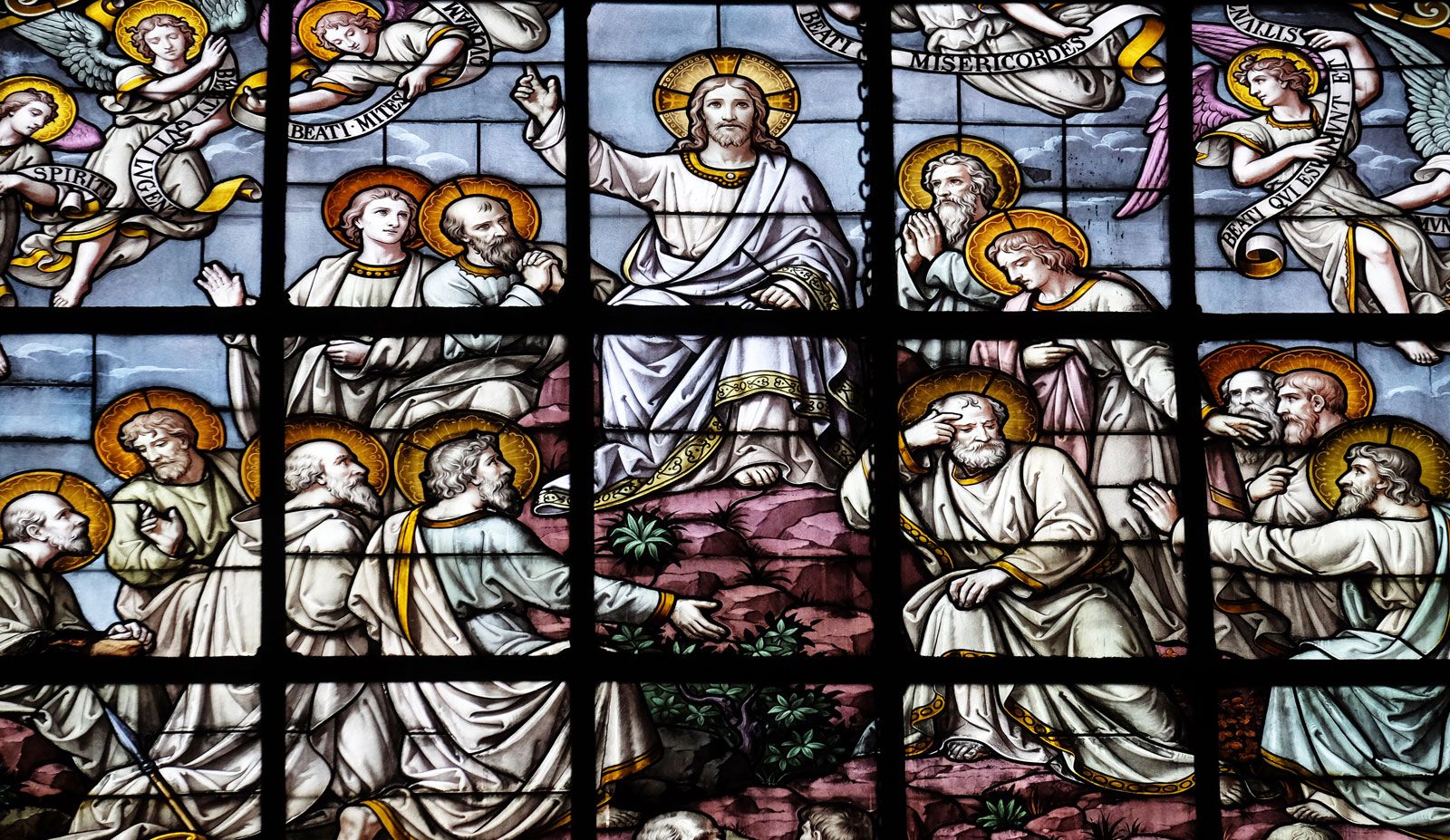 Despite its positive impact on the church, the Council of Nicaea also played a major part in the official severing of Christianity from its Jewish roots leading to a schism between Christians and Jews and between Christianity and Judaism. First, a change a doing away with celebrating Passover and creating two new holidays: Good Friday and Easter; second, the Church officially created a change in their attitude towards the Jews; and third, strict rules against Christians engaging with Jews.
The first changes were moving away from the Lord’s Biblical holy days being no longer applicable and celebrating Jewish holidays, even though Jesus instructed his disciples to prepare a Passover meal (Luke 22:7-8). Nor keeping Shabbat as the holy day of rest but making Sunday a new weekly holy day. When making suggesting the change Constantine wrote “At the same time” he added ”it is our duty not to have anything in common with the murderers of our Lord.”
For the New Testament apostles, they understood there was Israel and Gentiles could be grafted into the natural olive tree of God’s covenant people Israel. In the Apostle Paul’s world, it was Gentiles who were without God and without hope (Ephesians 2:12), but now this was turned around and applied to the Jewish people – a doctrine that ran contrary to all the New Testament taught. Paul wrote:
But I am speaking to you who are Gentiles. Therefore insofar as I am an apostle of Gentiles, I magnify my ministry if somehow I may move my own people to jealousy and save some of them. For if their rejection proves to be the reconciliation of the world, what will their acceptance be but life from the dead? If the first piece of dough is holy, the lump is also; and if the root is holy, the branches are as well. But if some of the branches were broken off, and you, being a wild olive, were grafted in among them and became partaker with them of the rich root of the olive tree, do not be arrogant toward the branches; but if you are arrogant, remember that it is not you who supports the root, but the root supports you. You will say then, “Branches were broken off so that I might be grafted in.” Quite right, they were broken off for their unbelief, but you stand by your faith. Do not be conceited, but fear; for if God did not spare the natural branches, He will not spare you, either. See then the kindness and severity of God: to those who fell, severity, but to you, God’s kindness, if you continue in His kindness; for otherwise you too will be cut off. And they also, if they do not continue in their unbelief, will be grafted in; for God is able to graft them in again. For if you were cut off from what is by nature a wild olive tree, and contrary to nature were grafted into a cultivated olive tree, how much more will these who are the natural branches be grafted into their own olive tree? For I do not want you, brothers and sisters, to be uninformed of this mystery—so that you will not be wise in your own estimation—that a partial hardening has happened to Israel until the fullness of the Gentiles has come in; and so all Israel will be saved; just as it is written: (Romans 11:13-26)
With the second schism and the change of attitude toward the Jewish people, the belief that Jews were infidels, pagans and enemies of the faith was propagated, which is emphasized in these words written by the Christian Emperor Constantine in a letter on the keeping of Easter:
We ought not therefore to have any thing in common with the Jews, [their religious practices] for the Savior has shown us another way...And consequently, in unanimously adopting this mold, we desire, dearest brethren, to separate ourselves from the detestable company of the Jews...How can they be in the right, they who, after the death of the Savior, have no longer been led by reason but by wild violence as their delusion may urge them?...It would still be your duty not to tarnish your soul by communications with such wicked people as the Jews...
The third schism between Christians and Jewish believers was created a few decades after the first council. Because some Christians did not accept the new rules, eventually a new rule was created whereby Christians who still kept the Jewish Sabbath were to be basically excommunicated.
The Problem with Replacement Theology
Replacement theology primarily teaches the modern church has superseded—or replaced—Israel in terms of the blessings and promises intended for the Jewish people in Scripture. It is based on four central ideas:
- God has revoked His promises to Israel because they rejected Jesus the Messiah, and they now belong to the Christian church
- The Jews are no longer God’s chosen people
- God has no future plans for Israel
- God condemns the Jews for the Messiah’s death
This belief suggests that God's plan to bring the Messiah into the world scene through Israel—with all His unconditional covenants and blessings with Israel and the Jewish people—were revoked after some of the Jewish people took part in Jesus’ crucifixion and rejected the Messiah. God then suddenly pivoted and transferred the promises and blessings intended for them onto the Church.
First, it is unfair to blame the Jews for Jesus’ death when we know we are the ones who put Him on the cross because of our sin. Further, no one can be assigned blame for His death. Only He can allow Himself to die.
“No one takes [my life] from Me, but I lay it down of Myself. I have power to lay it down, and I have power to take it again.” John 10:18
Jesus’ sacrificial death was a part of God’s plan before the beginning of creation. He always had the power to save Himself or prevent His crucifixion completely, but He did not. He alone has the power to live or die, which He demonstrated when He rose to life again three days later.
Israel’s status as God’s chosen people is not dependent upon their universal belief in Jesus as Messiah. Since the covenant that God initiated with Abraham in Genesis 12 and 15 was put into effect thousands of years before Messiah was revealed, it is not suddenly conditional upon belief in Him now.
Remember, Scripture makes it clear that this Savior—Jesus Christ—was born in Israel, died in Israel, rose from the dead in Israel and is coming again to Israel! How do we know? Revelation tells us.
Revelation 12:13 says: “Now when the dragon saw that he had been cast to the earth, he persecuted the woman who gave birth to the male Child.” Rev.12-1-2 describes the woman who is about to give birth. A dragon then comes who is ready to devour her child. In this passage, the “dragon” is Satan, the “woman” is Israel, and the “male Child” is the One whom Israel “gave birth to”—Jesus Christ. As mentioned above, ever since the fallen angel Satan was cast out of Heaven he has been on a mission to attack God’s plan, he could not stop the birth of the Savior so he has turned his attention to destroying God's people (Jews and Christians and any potential gentiles) and God's plan with Jesus' second coming to earth.
The imagery parallels Joseph’s dream of sun, moon, and stars representing Israel. In the dream “the sun and moon and eleven stars were bowing down” to Joseph (Genesis 37:9). His family rightly understood that the sun was his father Jacob (known as “Israel”), and the moon was his mother. The eleven stars represented all of Joseph’s siblings (and Joseph would make twelve total). The twelve stars in the woman’s crown symbolizes the twelve tribes of Israel.
Jesus spoke of this last half of Daniel’s final seven years in Matthew 24:15-21, where He called it a time of “great tribulation” that will be unprecedented in history. Here, we see a specific example of conflict between God and Satan, with Satan targeting Israel in a final bid to derail God’s plan.
We continue to see evidence of God’s love for the Jews in the book of Revelation, most especially in chapters seven and fourteen. In these two chapters, we see that God will preserve 144,000 Messianic Jews, 12,000 from each tribe of Israel. He will seal them and protect them from the antichrist until their mission of spreading the gospel is complete during the tribulation.
It had been previously prophesied that Israel would repent and turn back to God (Zechariah 12:10) and Rev. 7:4 speaks of Israel in the end times: “And I heard the number of those who were sealed. One hundred and forty-four thousand of all the tribes of the children of Israel were sealed.” the 144,000 speaks of actual people living during the end-times tribulation—12,000 taken from every tribe of the children of Israel, according to verses 5–8. Their mission seems to be to evangelize the post-rapture world and proclaim the gospel during the tribulation period. As a result of their ministry—“a great multitude that no one could count, from every nation, tribe, people and language” (Revelation 7:9)—will come to faith in Christ.
 Paul's Words vs. Replacement Theology
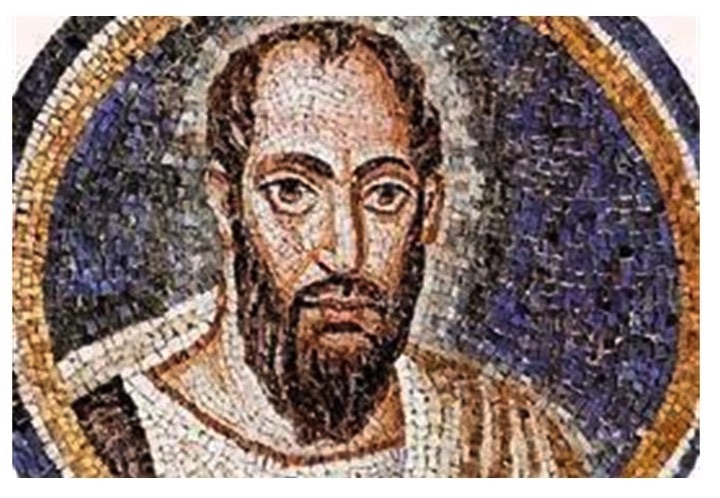
The Apostle Paul devotes three chapters to the question of Israel’s status. In Romans 9 Paul expresses deep sorrow for his fellow Israelites who are not all part of the remnant of true Israelites because many have not recognized or accepted Jesus as the Messiah. Paul then speaks of God's election and how it does not always fit it with human notions of fairness and justice and that God's word has not failed emphasizing the faithfulness of God despite apparent contradictions.
Paul explains "For not all who are descended from Israel are Israel." (Romans 9:1) Not all physical descendants of Israel are part of the spiritual Israel. True Israel consists of those who have faith in God's promises. As noted above with the list of Israel's descendants, some of these descendants became enemies of their own people. “…Who are the Israelites, to whom pertain the adoption, the glory, the covenants, the giving of the law, the service of God, and the promises.” Romans 9:4
Paul also addresses the issue of Israel's unbelief by contrasting it with the inclusion of the Gentiles, who were not originally part of the covenant community but have now received righteousness through faith in Christ (Romans 9:24-25). This expansion of God's redemptive work beyond ethnic Israel to encompass Gentiles from all nations reflects the breadth of God's mercy and underscores the universal scope of the gospel.
Paul affirms God’s unbroken faithfulness – "I ask then: Did God reject his people? By no means! God has not cast away His people whom He foreknew.” (Romans 11:1-2)
“For what if some did not believe? Will their unbelief make the faithfulness of God without effect? Certainly not! Indeed, let God be true, but every man a liar.”( Romans 3:3-4). He then explains that Israel has experienced a partial hardening until the full number of the Gentiles comes in, and in that future mercy “all Israel will be saved,” because the gifts and calling of God are irrevocable (Romans 11:25–29).
The context of the surrounding Scripture affirms Paul is talking about the true Israel: there remains a special, unique, and irreversible calling upon Israel as a nation. Adherents to Replacement Theology argue the opposite—that God has revoked that calling on Israel and transferred it to the church. Though God loves the church, the Jews continue to be God’s chosen people. Evidence of His love for them is evident throughout the Bible. An example is in Zechariah 2:8, where He proclaims them “the apple of His eye” and warns anyone who would harm them.
We find additional evidence of God’s faithfulness to Israel in Jeremiah 31. The entire chapter describes God’s desire and intent to keep His promises to His chosen people just as Jeremiah prophesied:
“I will be the God of all the families of Israel, and they shall be My people.” Jeremiah 31:1
“Again, I will build you, and you shall be rebuilt, O virgin of Israel!”Jeremiah 31:4
“I will cause them to walk by the rivers of waters, in a straight way in which they shall not stumble. For I am a Father to Israel, and Ephraim is My firstborn.”Jeremiah 31:9
 Conflicting Interpretations of Scripture in Bible Study
While some Christian denominations have tried to change their attitude one area that tends to contribute to antisemitism is Bible interpretation. In two previous articles I share the hermeneutics science of Bible interpretation and the proper exegesis principles to interpret certain passages. What was not included in those articles was the several hermeneutic types of interpretation: Literal, Moral and Allegorical. They all have their part in how we understand Scripture.
- The literal interpretation approach seeks out the text’s plain and direct meaning.
- The moral approach aims to reveal the ethics behind any text.
- The allegorical interpretation suggests that the biblical narratives hold deeper, metaphorical meanings.
Allegorical Interpretation
Early Christian fathers, such as Origen, mainly interpreted text allegorically. Origen believed the Bible was the inspired Word of God but he stood firmly within the Alexandrian tradition of allegorical interpretation, looking for the hidden spiritual meaning he felt was more important than the literal meaning. While he helped shape Christian exegesis for a millennium some of his allegorical interpretations led to serious doctrinal errors that later had to be corrected.
The allegorical method looks for hidden meanings that reflect broader theological truths even in obvious teachings, thereby exchanging the obvious meaning for the obscure. This can lead to disregarding what the Bible really has to say. For example, the Unity church doesn’t believe in the Trinity, rather Jesus is just a “wayshower”. They claim devotion to the Bible yet deny Jesus’ atonement. They do all this by allegorizing the Bible.
After the Reformation the literal interpretation became popular with Evangelical and fundamentalist Christians whereby unless a passage is clearly intended by the writer as allegory, poetry, or some other genre, it should be interpreted as literal statements by the author. Some passages of the Bible are intended to be taken symbolically, or allegorically. The misinterpretation within allegorical interpretation is when every passage has to have an allegorical interpretation, regardless of whether or not it is intended to be understood in that way.
Moral Interpretation
The moral sense refers to how the passage shapes your values and behaviors. Many believers approach the Bible primarily as a devotional tool, seeking principles for moral living not only for their personal life but for how to conduct oneself in business and leadership positions. Some verses expound moral codes familiar to us all (such as the 10 Commandments in Exodus or the Beatitudes in Matthew 5). Also, many of Jesus’ parables you can interpret them as moral stories but Jesus did not teach them as moral stories. He used them to convey the Kingdom of God. If we only understand them as moral stories we miss profound truths about God, his kingdom, and his people alongside the everyday, practical truth obviously present in the story. They instruct us on how to live as God intended.
Literal Interpretation
When we read any piece of literature, but especially the Bible, we must determine what the author intended to communicate. A literal interpretation of Scripture generally means reading the biblical text in a plain-sense manner, taking each passage to communicate what it normally conveys in grammar and context. This approach does not exclude recognizing figurative language, symbolism, or poetic devices. Rather, a literal method seeks to understand each passage according to its genre, historical context, and authorial intent.
It’s important to recognize when a statement in the Bible is meant to be taken literally and when it is not so we don’t fall into strange or faulty assumptions.
The Bible uses figures of speech to enhance and embellish the text, making it more engaging and memorable for the reader. Throughout the Bible, we find a wide range of figures of speech employed by the biblical writers to convey deeper meanings beyond the literal interpretation of the text. Recognizing these figures of speech is crucial for understanding the intended message of the biblical authors.
Simile
A simile is a comparison between two unlike things using the words "like" or "as." This figure of speech is used to create vivid imagery and clarify concepts. In Isaiah 40:31, the prophet writes, "But those who wait upon the LORD will renew their strength; they will mount up with wings like eagles." The simile compares the renewed strength of the faithful to the soaring flight of eagles, emphasizing the power and freedom found in trusting God.
Metaphor
A metaphor is a direct comparison between two unlike things, suggesting they are alike in a particular way. The Bible uses metaphors heavily, especially when talking about Christ and Almighty His attributes, and His relationship with humanity. Through metaphors, the Bible illuminates difficult concepts, and we are able to broaden our understanding. For example, in Psalm 23:1, David declares, "The LORD is my shepherd; I shall not want." Here, God is metaphorically depicted as a shepherd, illustrating His guidance and care for His people.
Symbolism
Symbolism involves using an object, person, or event to represent a deeper meaning or concept. The Bible is rich with symbolic language, often pointing to spiritual truths. In Revelation 1:20, the seven lamp stands are explained as symbols of the seven churches:
Personification
Personification attributes human characteristics to non-human entities or abstract concepts. This figure of speech is often used in the Bible to make abstract ideas more relatable. In Proverbs 8:1-3, wisdom is personified as calling out to people: "Does not wisdom call out, and understanding raise her voice?
Hyperbole
Hyperbole is an intentional exaggeration for emphasis or effect. It is used in the Bible to underscore the magnitude of a situation or the intensity of an emotion. In John 21:25, the apostle John concludes his Gospel by stating, "There are many more things that Jesus did. If all were written down, I suppose that not even the world itself would have space for the books that would be written."
A given text may yield any one of these above methods or a combination of them all. There will always be some disagreement about whether certain texts are to be taken literally or figuratively and to what degree. The defense for literal interpretation comes down to God intentionally says what He means and means what He said.
For a text to be interpreted allegorically or figuratively, there needs to be justification in the text itself or something in the cultural background of the original readers that would have led them to understand the text symbolically. The goal of every interpreter who believes the Bible is the inerrant word of God is to discover the intended meaning of the text.
Finally, when we make ourselves the final arbiters of which parts of the Bible are to be interpreted literally, we elevate ourselves above God. Who is to say, then, that one person’s interpretation of a biblical event or truth is any more or less valid than another’s? The confusion and distortions that would inevitably result from such a system would essentially render the Scriptures null and void. The Bible is God’s Word to us and He meant it to be believed—literally and completely.
Conclusion
The Jews are still God’s chosen people. He has not condemned or rejected them nor broken His covenant with them. And He certainly has not removed His blessings from them and given them to the church. He has definite plans for them, and He will protect them through the end times (Revelation 21). The Bible clearly shows the church is a distinct entity from the nation of Israel, one that receives its own covenant of grace.
In order to understand God's faithfulness we need to understand the difference between conditional and unconditional covenants God made with His people. That will be the subject of my next article on Antisemitism.
____________________________________
1Since the Philistines were completely destroyed during the sixth to fourth centuries BCE, it is clear that no modern nation comes from them, including the Palestinians. The modern-day Palestinians did not emerge directly from the Ancient Philistines of Biblical times. Rather, the term ‘Palestinians’ describes the population of modern Palestine. It is a population primarily comprised of Arabs. This population arrived in the area principally during the Islamic conquests of the Levant. In addition to this primarily Arabic component, many modern-day Palestinians must also descend from Ancient Jewish and Samaritan families. Furthermore, some Ancient Philistine families must have descendants among the modern Palestinians, although they are completely imperceptible as a distinct group.
Three years ago, archaeologists digging in Israel revealed they had excavated a Philistine cemetery for the first time ever. Now, an extensive report on the DNA taken from the bones they uncovered has confirmed the origins of the Philistines – one of the arch-enemies of the biblical Israelites. DNA shows that Palestinians were Arab not Philistines. More about this find in this article. This article explains further the history of the Philistines and why they are not descendants of the Canaanites.
2 Communal lament is a form of prayer or song found in the Bible, where a group of people collectively express sorrow, grief, or penitence to God. classified by their focus on laments expressing deep sorrow for the travails of a nation and as a group asking for God's blessing or intervention.
3Ishmael, the son born by an Egyptian woman with Abraham had to be sent away because of his hateful envy of Isaac, the legitimate son. Before he was born the Angel of the Lord prophesied of him, “He will be a wild donkey of a man; his hand will be against everyone and everyone’s hand against him, and he will live in hostility toward all his brothers.” Later, Ishmael receives a blessing by God, “Behold, I have blessed him, and will make him fruitful, and will multiply him exceedingly; twelve princes shall he beget, and I will make him a great nation. (Genesis 17:20-22) The “great nation” from his twelve sons is a group of tribes spread primarily in the northwestern and central areas of the Arabian Peninsula.