The Real Story of the Christmas Magi - The Wise Men from the East
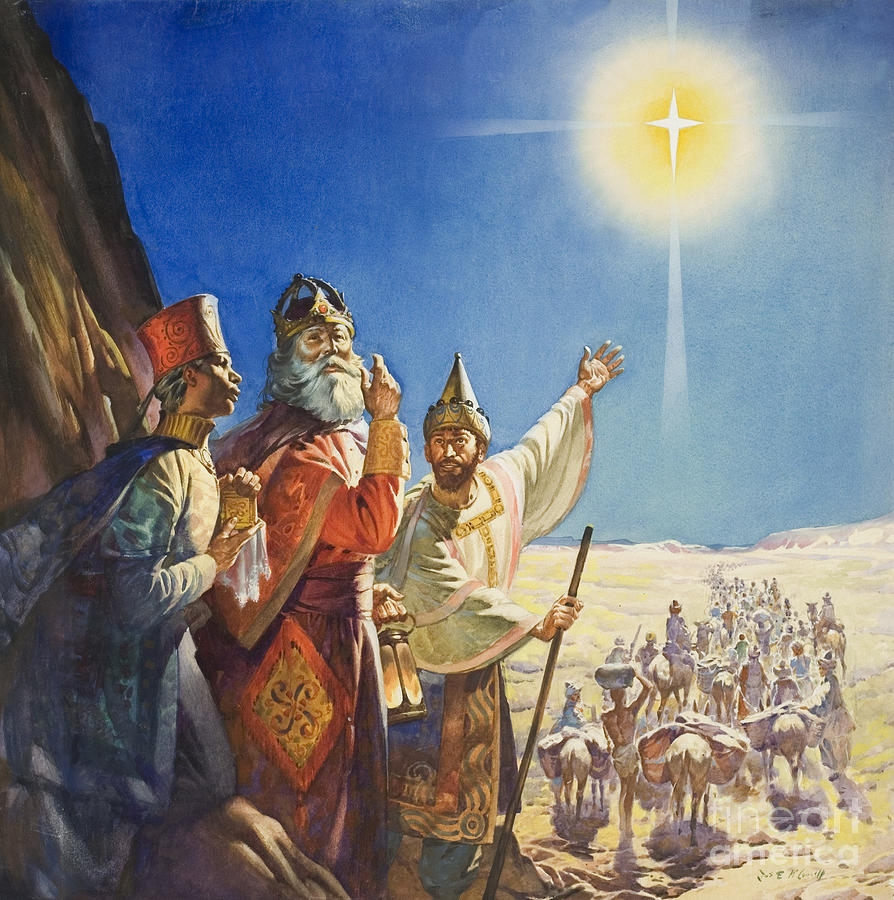
Each year in celebration of Christmas and the birth of Christ we exchange gifts, bring out our favorite decorations, and send and receive cards, with some that include manger scenes with three Magi visiting the baby Jesus. One card that we often see is of the three Magi riding on camels, following a star to find the new king of the Jews and bringing gifts. We also sing songs about these Magi calling them kings, and have given them names and how many of them arrived in Bethlehem. But what does the Bible actually say about these Magi and were they really kings? And does it matter what we believe about them?
The Gospel of Matthew is the only Gospel that speaks of Magi. Matthew describes them simply as “wise men from the east” who came to visit the newborn King of the Jews:
Now when Jesus was born in Bethlehem of Judaea in the days of Herod the king, behold, there came wise men from the east to Jerusalem, Saying, Where is he that is born King of the Jews? for we have seen his star in the east, and are come to worship him. . (Matthew 2:1-2)
We read nothing about these wise men being kings, how many wise men came, and if anyone else came with them, let alone what their names were. What we do read in Matthew is that they brought gifts of gold, frankincense and myrrh. (Matthew 2:11)
Since Matthew’s words have been read and shared over the centuries, the story has become embellished. Starting around the 6th century early church traditions had the Magi associated with being kings; the number of them became three because three gifts were given; and they were even given names: Bithisarea, Melichior, and Gathaspa. The idea of the Magi being kings likely came from passages in the Old Testament such as in Psalm 72:10-11 and Isaiah 60:6, which speak of kings bringing tribute and gold.
Who Were the Magi?
Returning to Scripture, Matthew called the Magi “wise men”. Within the Persian Empire there was a group called the Magi. The Greek word used is magoi, a Latinized form of the original Persian word and refers to priests, astrologers, astronomers or wise men in the Persian tradition. But, according to Herodotus, often called “The Father of History”, their key skill was not astrology, it was dream interpretation.
Herodotus also wrote that the ancient Magi were a hereditary priesthood of the Medes, credited with profound and extraordinary religious knowledge, unique customs, including their practices related to sacrifices, similar to the one God gave to Israel through Moses. They were monotheistic, believing in the existence of only one god. These wise men were common in regions such as Persia, Babylonia, and parts of Arabia. They studied astronomy, natural science, mathematics, and ancient texts. They observed the movement of the stars, which was a respected field of knowledge in their culture. Because of their varied skills, as well as the ability in dream interpretation, the Magi were often advisers to kings and rulers. They never became kings themselves, instead they contributed their wisdom, education, and spiritual knowledge to influence their leaders.
It is believed the Magi weren’t just casual stargazers - they were experts in decoding the mysteries of the cosmos. They believed that God communicated through celestial signs and blended meticulous observation with the stars and planets to interpret these messages. Their work was a mix of science and spirituality, creating a system that combined detailed astronomical study with symbolic meaning.
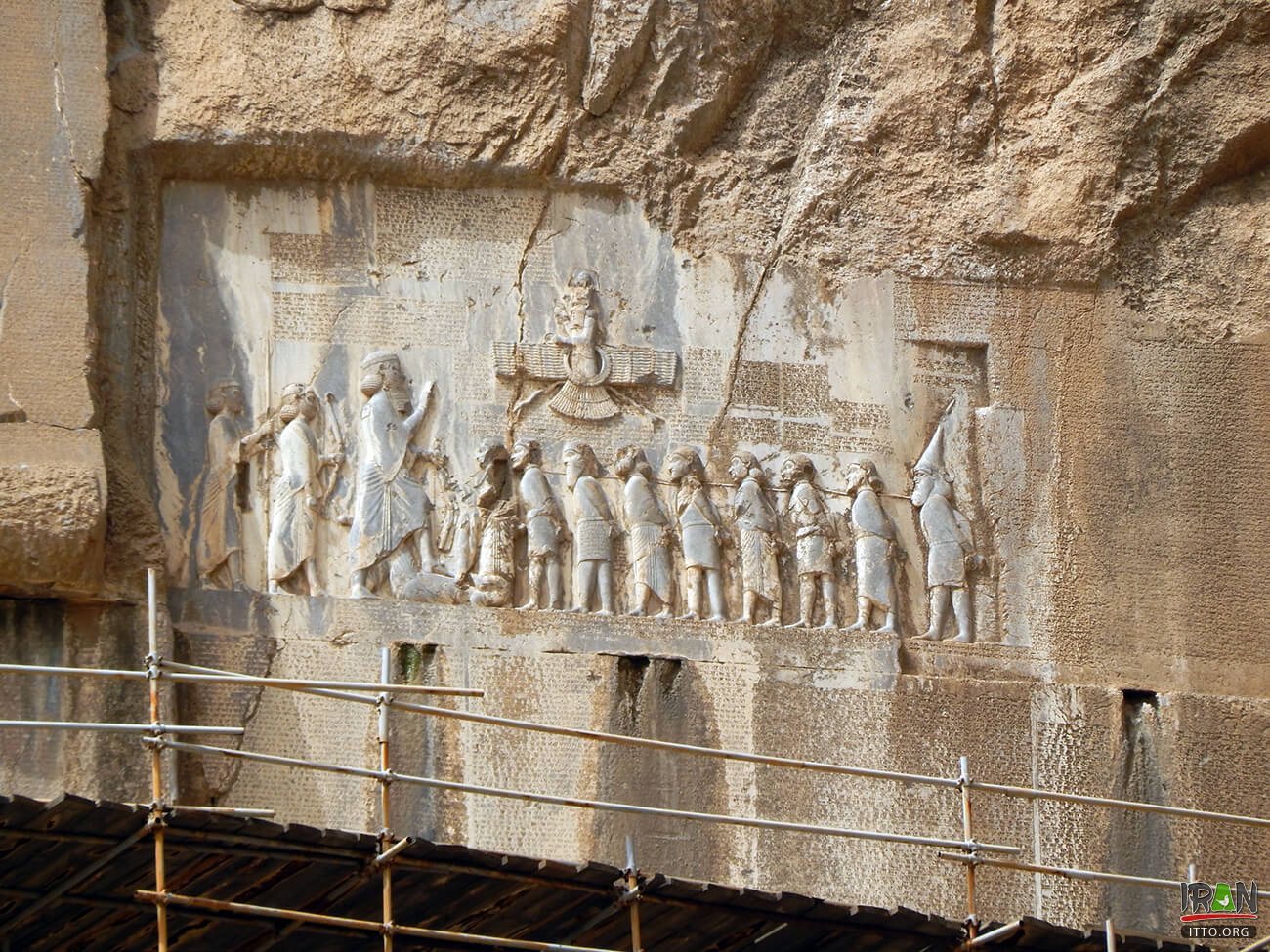 The Behistun Inscription is a significant ancient rock relief and multilingual inscription created by Darius the Great around 520-518 BCE, located in Kermanshah Province, Iran.
Beginnings of the Medes Magi
The Ancient records indicate that the earliest Magi lived in Media and Persia as a religious caste before the time of Zoroaster (ca. 600 BC), the founder and prophet of the Zoroastrian religion. Prior to Zoroaster, the Magi religion is thought to have been a type of nature worship. When Zoroastrianism1 became prominent in Persia, many Magi adopted it as their own and became the priesthood of that religion.The term "magi" appeared in the Behistun Inscription.
The Magi splintered into two major sects after the death of Zoroaster:
- those who continued following the religion of Zoroaster [the “Eastern Magi”], and
- those who returned to the ancient forms of nature worship, especially emphasizing sun worship.
By the 5th century BC, historians like Herodotus identified them as both a tribe within the Medes and a specialized priestly class, highlighting their dual identity as an ethnic group and religious elite. Darius the Great (king of Persia in 522-486 BC) elevated the Magi over the state religion of Persia because they had proven themselves capable of interpreting dreams.
Though Zoroastrianism is no longer a world-dominant faith, its ideas echo in the world’s great religions. Many scholars argue that during the Jewish exile in Babylon, and under Persian rule, Jewish thought absorbed Zoroastrian concepts. The notions of angels and demons, heaven and hell, resurrection, and a final judgment became central to Judaism and later flowed into Christianity and Islam.
At the time of Christ the Magi from the east (Persia) would have had significant parallels between their religious belief system and the Old Testament. Below is a list of their major compatibility:
- Zoroastrians believed in one supreme God who created the heavens and the earth, who authored all that is good.
- They believed in a spiritual adversary who authored evil.
- They believed in a coming Redeemer, a prophet who would be sent by God to save mankind.
- They strictly forbade the worship of idols.
- They believed in angels and in devil spirits and in the eventual triumph of good over evil.
- They set forth a system of laws and ethics stressing a strict code of moral behavior.
The idea of a cosmic struggle between good and evil, of human beings as moral agents, of a savior figure at the end of time—all of these can be traced back to Zoroastrian roots.
The Prophet Daniel’s Role
Not only did the teachings of Zoroaster have influence within the Magi of the east at the time of Jesus, the influence of Daniel most possibly did as well.
One of the titles given to the prophet Daniel was Rab-mag, the Chief of the Magi after he interpreted Kin Nebuchadnezzar’s dream. (Daniel 4:9; 5:11) Daniel not only interpreted his dream, but told the King what the dream was about, which the other wise men could not. Because of Daniel’s great spiritual connection and humbleness, and because he had successfully pleaded for the lives of the wise men who had failed to interpret the king’s dream (Dan. 2:24), Daniel came to be highly regarded among the Magi (saving many of their lives by pleading for them). Daniel served under five kings in both the Babylonian and Persian courts and all highly respected him, and thus his rise to Chief Magi earning the Magi’s respect as well. Thus he most likely would have also influenced the Magi’s beliefs making them receptive to an astronomical sign in the sky as a portent of a coming Redeemer.
Consequently, it might be expected that the Magi learned much from the Prophet Daniel about the one true God, as well as from so many Jews who remained behind in Babylon after the Exile, and intermarried with the people of the east. Jewish prophetic texts would have circulated freely in these academies as well, providing the Magi with direct access to Messianic expectations. The Magi also might have learned about the coming star and birth and from the pagan prophet Balaam (who lived in Persia) and his prophecy mentioning “a star” and “a scepter” rising out of Jacob, prophesizing a great king arising in Israel who was to come. (Num 24:17, Num 22:12)
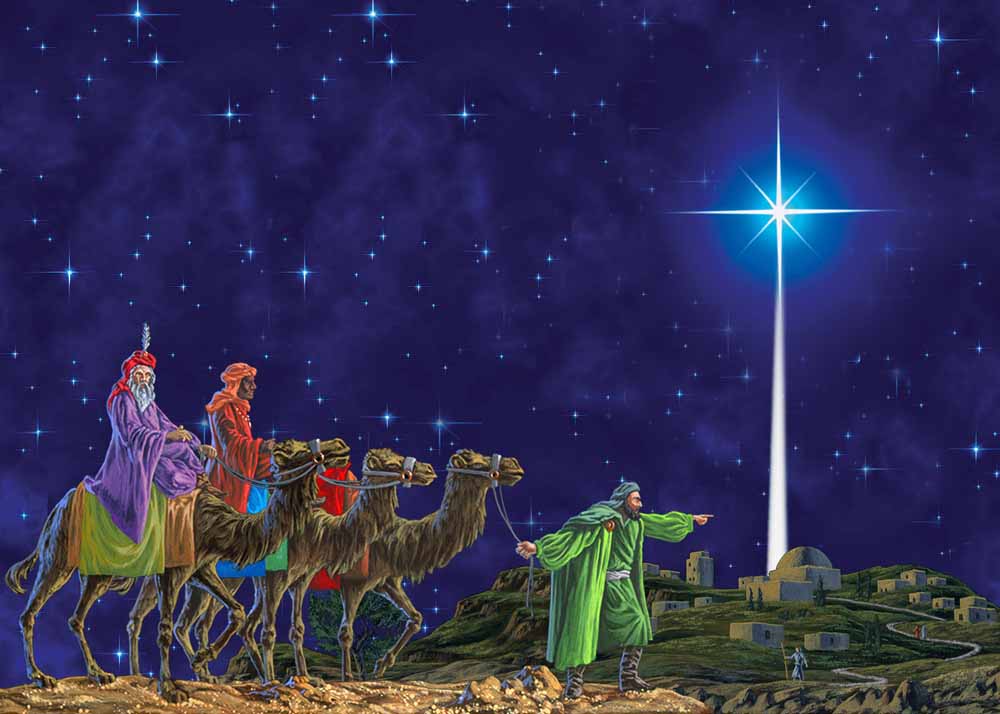 What was the star the Magi followed
In Matthew 2:2 the Magi mention they saw “His” star and that it was a sign of the new king that was born of the Jews. The Gospel of Matthew uses the Greek term "aster" to describe the star, a word that broadly refers to any celestial body. Astronomers and scholars have therefore tried to uncover what was this star the Magi followed. Famed astronomer Johannes Kepler (1571 - 1630) suggested it could have been the conjunction of Jupiter and Saturn in the constellation of Pisces, which occurred in 7 B.C. This conjection theory is quite popular but one of the problems with that theory is that the conjunction is about five years too soon.
Still others believe it was a miraculous, divine phenomenon and they probably are the closest to being correct. If we look closely at the words of Matthew, the Bible does not describe the star as a comet or an astrological sign. Instead, it presents the star as a supernatural phenomenon guided by God as described in the Gospel of Matthew 2:9, with the star moving ahead of them and stopping over the place where the child was. Since a star stays fixed in the heavens, the Magi appeared to follow a phenomenon where the light was extraordinary enough that they knew it was “His star”. When they arrived in Bethlehem, the star “stood over where the young Child was” . No ordinary star or planetary alignment could behave this way.
If the star could be proven to be a natural phenomenon, that would destroy its significance. It is significant because it was supernatural. It was different from other ordinary stars, it led them, it appeared to move, and it settled over the exact spot where they could find the new Christ babe.
Jewish Shepherds
Jewish shepherds also received the announcement of a Savior born that day in the City of David, who was “Christ the Lord”. Though no star, this announcement had its own light where “the glory of the Lord shone around them”. (Luke 2:8-12)
The narrative begins with shepherds tending their flocks by night in the fields near Bethlehem. These shepherds, considered lowly and marginalized in society, were chosen by God to receive the first announcement of the Messiah's birth. Following this announcement, a multitude of the heavenly host appeared, praising God and declaring:
"Glory to God in the highest, and on earth peace to men on whom His favor rests!" (Luke 2:14)
Were the Magi traveling alone?
The Magi likely traveled with a group, as their journey from the East to Jerusalem would have been long and potentially dangerous, requiring support and resources. Estimating the distance traveled by the Magi involves piecing together historical accounts and geographical data. Most likely they were from regions within the former Persian Empire (e.g., Parthia, Babylon), known for magi connected with the Zoroastrian traditions. While the Gospel does not specify their point of origin outside of from the “east, scholars suggest that they may have traveled anywhere from 500 to 1,200 miles. Thus their purpose and belief in what they were doing was immeasurable.
The journey would have taken weeks or even months, depending on their original country and their pace as well as the conditions they faced along the way. They most likely were traveling on horses as the Persians were accomplished horsemen. Camels would have been present; however, they would have been used for carrying supplies. Still, the physical toll of such a journey cannot be understated.
While traditionally we have a picture of three men alone traveling on camels, that is highly unlikely. Royalty did not travel alone in ancient times on whatever route they took due to the constant danger of robbers waiting to prey on travelers and caravans. Thus people would typically travel in large caravans. The Wise Men would have traveled as most royalty and nobility did with a huge entourage of armed escorts and servants.
We must also take into consideration the involvement of the two ancient superpower empires of that time: Rome and Parthia. The Parthian Empire was in what are present-day Iran and Afghanistan. They were subject successively to the Assyrians, Medes, Persians, and Macedonians under Alexander the Great, and then to the Seleucids. After the Roman Empire was born (27 BC) several wars occurred between the two powers.
The Romans usually lost and then the Parthians would counter-attack. The Parthian forces swept all Roman opposition completely out of Palestine, including Herod himself who had to flee to Alexandria and then to Rome. With Parthian collaboration, Jewish sovereignty was restored, and Jerusalem was fortified with a Jewish garrison. Palestine was Parthian, not Roman. But later Rome would claim it, and Herod would finally succeed in receiving the title King of the Jews from the head of the Roman Empire,. It took three years, including a five-month siege by Roman troops, before King Herod was able to occupy his own capital city after Rome supplied him with a large army.
Herod was given control of a buffer-state between two mighty powers in contention. The question on Herod’s mind could have been after the entourage arrival “Would that Palestian state conspire against him and bring in the Parthians for aid to overturn him? Interestingly, Herod was an Edomite, an enemy of the Jews.
It was a group of Persian-Parthian king-makers who entered Jerusalem in the latter days of the reign of Herod. With the threat of a possible takeover through a Jewish revolt with Parthian support due to the king’s lack of popularity, it was a very precarious visit for all concerned. And this was not just three guys on camels. These Magi were king-makers. They could have had major support, probably a cavalry escort to insure their safe penetration into Roman territory. Scripture records the reaction to their arrival:
“When Herod the king had heard these things, he was troubled, and all Jerusalem with him.” Matt. 2:3
Would the entire city of Jerusalem be upset with just three men on camels arriving? This was a major Parthian entourage that had arrived. We might not know the number of them, but Herod was very concerned, considering the Roman-Parthian wars. Since he was appointed by Rome and not Jewish, he was not seen as the King of the Jews. He had most likely contrived his way into his office and it would clearly upset him having this request with their asking where the “new king of the Jews” could be in his domain.
The Magi Find the King
A question always arises about the Magi, when did they arrive? There is no way to ascertain how long it took them to find Jesus after the star first appeared at his birth. Many have reasoned that it could not have been earlier than two weeks from his birth, but most likely a minimum of 40 days on up to even two years. Thus, it is most likely that the Magi did not visit the baby Jesus while he was in the manger as depicted on so many drawings and manger scenes. Matthew 2:11 also says "they came into a house".
Here are the facts that support this:
1. In accordance with the Law, Mary and Joseph took their child to the temple to be dedicated to the Lord. (Luke 2:22)
Levitical law (Lev 12:2-4) dictates when this should happen. The days of Mary’s purification were to be at least 40 days after the birth of Jesus. For seven days, a woman was deemed to be unclean. On the eighth day, a man child was to be circumcised. Then, 33 days were to pass for a woman’s purification to be fulfilled. Then they take their baby to the Temple for purification.
2. Levitical law also requires an offering of a lamb and bird to make atonement for the woman, and to cleanse her from the issue of blood. A provision was also made for those who could not afford to offer a lamb. In such cases, the woman was able to bring two turtledoves or two young pigeons.
We learn in Luke 2:24 that Mary made an offering of birds indicating that she and Joseph did not have the necessary funds to purchase a lamb for their burnt offering. The wise men brought gifts of gold, frankincense, and myrrh which would have provided the funds to acquire a lamb for her purification.
Thus, according to Luke, the conclusion is that the wise men could not have arrived before the 40 days at the earliest or Mary would have had the funds for the lamb.
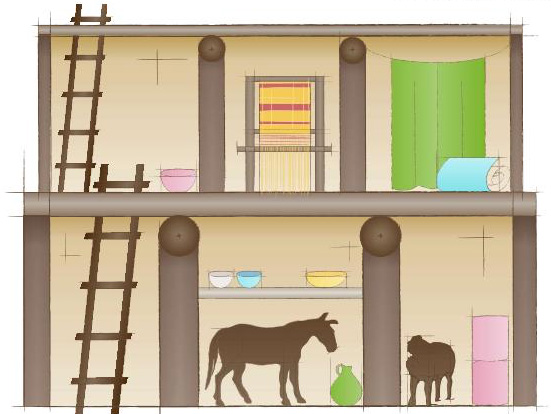 Jesus was born in an inn, but it was full as there was no room. Strong’s Dictionary uses the Greek word “kataluma” which besides meaning "inn" it can also mean "guest chamber". Historical records and archeological findings confirm that first-century Jewish homes were constructed with an upper room guest chamber and a lower level for sheltering animals, especially during the cold weather. If this was the case, Jesus could have been born in the guest chamber lower level for the animals if there was no room in the house.
After arriving in Jerusalem the Magi sought out Herod the king and asked where this new King of the Jews was born.
“Now when Jesus was born in Bethlehem of Judaea in the days of Herod the king, behold, there came wise men from the east to Jerusalem, saying, ‘Where is He who has been born King of the Jews? For we saw His star when it rose and have come to worship Him.’” ( Matthew 2:1-2)
Herod had no desire to see a rival Jewish king set up. He then convened “all the chief priests and scribes of the people together” and ascertained from them that a prophet would be born in Bethlehem of Judaea. From the Magi he learn the time of the new king’s birth, and from the Jewish scribes he discovered from the prophecies in the Tanach (the Old Testament) that the Promised One, the Messiah, and where he would be born—Bethlehem. Feigning a desire to go and worship the new king Herod requested them to keep him informed. He urged the Magi to locate the child then report back to him so that he could go and pay homage (Matthew 2:3-8). But his true intentions was not to honor him, but to murder him.
When the Magi went out from Herod they found the star again, which led them to a house where they found the babe Jesus. There they worshiped him and presented to him gifts.
... lo, the star, which they saw in the east, went before them, till it came and stood over where the young child was. When they saw the star, they rejoiced with exceeding great joy. And when they were come into the house, they saw the young child with Mary his mother, and fell down, and worshiped him: and when they had opened their treasures, they presented unto him gifts; gold, and frankincense and myrrh. (Matthew 2:9-11)
The Gifts
The gifts brought by the Magi of gold, frankincense, and myrrh to the infant Jesus carried a specific symbol. Gold spoke to His kingship (Jesus as the true King of Kings), frankincense was an incense used in priestly duties (Jesus as the perfect High Priest), and myrrh was an embalming spice, offered in anticipation of His death (Jesus as the supreme Savior, who came to die for the sins of mankind).
Whether the Magi fully knew it or not, their gifts told a story of a future for this new king, Gold representing God himself coming down from Heaven as our King to fulfill his priestly duties (frankincense) and eventually die for our sins (myrrh). Each gift was a deliberate choice, steeped in ancient sacred traditions. Through these symbols, the Magi demonstrated their recognition of Jesus' extraordinary role in both the physical and spiritual worlds, blending devotion, prophecy, and wisdom in their act of homage.
The "Massacre of the Innocents”
The story of the wise men ends in both victory and tragedy. Herod had asked them to keep in touch with him when they found the child, but they did not. After finding the babe and presenting their gifts, the Magi “being warned in a dream that they should not return to Herod” (as highly astute men of dream interpretation) they departed to their own country another way home, ignoring Herod’s request. (Matt. 2:12).
Joseph was also warned in a dream and left the next morning for Egypt:
And when they were departed, behold, the angel of the Lord appeareth to Joseph in a dream, saying, Arise, and take the young child and his mother, and flee into Egypt, and be thou there until I bring thee word: for Herod will seek the young child to destroy him. (Matt. 2:13-14).
Once Herod realizes he has been duped and the Magi left without reporting to him, he was furious, he ordered all children under the age of two in Bethlehem and beyond to be killed, according to the time which he had inquired of the wise men. This would also indicate that the child Jesus could have been at least a year old when the Magi arrived, and thus they found him in a "home" and not a place for feeding the animals. Herod would have made the order up to two years old to give extra months in case the Magi were not exact with the birth date.
Does our belief about the Magi really matter?
Early Christian writers did not agree on the number of Magi who visited Jesus. Some had three, some had four or more, and some had twelve. The number of wise men was not an essential belief in the early Church.
Whether the star that led the wise men was natural or miraculous, the star served God’s purpose in bringing the Magi to Jesus.
The gifts they brought all had important meanings and held a lot of value, thus contributing to the safe journey of Jesus’ family away from the coming massacre of the children after he was warned by the angel. The gifts non access at Jesus’ Temple Purification to purchase a lamb gives us a truer picture of how old Jesus could have been at the time of their visit.
What does matter is the profound theological meaning of their visit connected with who they were and what they believed. They represented foreign priests from the Gentile world coming to worship the Jewish Messiah, thereby fulfilling Old Testament prophecies. They weren’t just “wise men” or “kings” themselves, they were men interested in truth, even honoring other religions that honored the one true God. The prophecy of the Light to the Gentiles is a significant theme in the biblical narrative, highlighting God's plan for salvation to extend beyond Israel to all nations. (Isaiah 42:6, Isaiah 49:6)
Isaiah prophesied that nations would come to the brightness of God’s rising, and kings would come to his light. (Isaiah 60:3) The Magi fulfill this prophecy, traveling far to see the newborn king. Their arrival shows that Jesus came not only for Israel but for all humanity.
The Magi also show us the importance of Faith. The contrast between the Magi and Herod and the religious leaders and Jewish scribes illustrates different responses to Christ. The Magi traveled a great distance, overcame obstacles, and humbled themselves to worship a child in a simple house. Herod, lived nearby and had all the religious knowledge given to him from the Jewish scribes at his disposal, and he rejected Christ and tried to kill him. The religious leaders in Jerusalem knew where the Messiah would be born. Even hearing that he had just been born they did not go to worship him themselves or follow their own prophets. They had the Scriptures but lacked the faith and humility of the Magi.
The Magi’s faith and persistence challenge us to examine our own response to Christ as our Lord and Savior. Their willingness to follow God’s leading, even when it took them far from home, models the commitment required of all believers to be willing to follow the Holy Spirit wherever it takes us.
____________________________________
1Zoroastrianism originated in ancient Persia around the 6th century BCE, founded by the prophet Zoroaster. It became the state religion of the Persian Empire and significantly influenced later religious traditions, including Judaism, Christianity, and Islam. Zoroastrianism is one of the world’s oldest monotheistic religions and is known as a religion of light, truth, and order, built around the eternal struggle between good and evil.